
Your quality of life
is our goal 💙
Week 27
💪 Muscle-Centered Insight – Your muscle knows more about itself than we thought. A brand-new paper in Biomolecules (June 2026) looks at how myokines regulate the muscle itself – not just the brain, bones, and immune system.
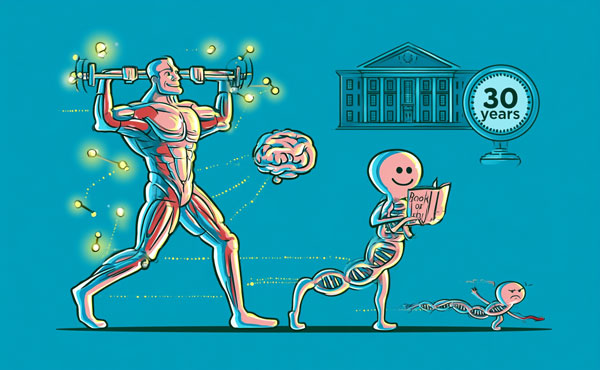
🏃 Functional Long Athletic Life – Harvard tracked 150,000 people for 30 years and found the exact strength training sweet spot for maximum longevity benefits. The number is surprisingly attainable.
🧠 Mindset, Awareness & Lifestyle – Stanford scientists confirmed: People with a negative view of aging live on average 7 years less. Your mindset is biology.
🔦 Spotlight – A new AI tool creates your personal "Book of You" from biomarkers, test results, and health trends. And FLX-101's own Functional Longevity Journal does something similar – analog, in your hands, starting whenever you're ready.
🏃 Functional Long Athletic Life – Harvard tracked 150,000 people for 30 years and found the exact strength training sweet spot for maximum longevity benefits. The number is surprisingly attainable.
🧠 Mindset, Awareness & Lifestyle – Stanford scientists confirmed: People with a negative view of aging live on average 7 years less. Your mindset is biology.
🔦 Spotlight – A new AI tool creates your personal "Book of You" from biomarkers, test results, and health trends. And FLX-101's own Functional Longevity Journal does something similar – analog, in your hands, starting whenever you're ready.
🌍 Reading in English but prefer another language? Simply switch at the top of the page – we've got you covered in DE as well.
1. 💪 Muscle-Centered Insight – Signaling Molecules, Myokines & More
Your muscles know more about themselves than we previously thought.
A brand-new paper—published on June 10, 2026, in Biomolecules—shines a light on a previously under-researched aspect of myokines: How do they actually affect the muscle itself? Previous research has primarily examined the long-range effects of myokines on the brain, bones, and immune system. But the new question is: What happens when the muscle receives its own cocktail of signaling molecules?
- Myokines such as Apelin are apparently essential for the muscle to respond to strength training with actual growth—without them, the IGF-1 signaling pathway fails, and hypertrophy does not occur.
- Myostatin—the muscle's natural growth inhibitor—is directly influenced by genetic variants, according to a new study involving over 1.1 million participants: People with lower myostatin activity carry more muscle and less body fat.
- Particularly exciting: Myokines are increasingly being defined as "exerkines"—signaling molecules that are only active when you move. When you rest, you don't just lose muscle—you also lose the biochemical language your body uses to regulate itself.
This is no longer a fringe field of science. It's the mechanism that explains why exercise is the most powerful medicine that comes without a package insert.
🔗 Potential Influence of Myokines on Skeletal Muscle Hypertrophy Signaling Pathways – Biomolecules, June 2026
🔗 Exercise-Induced Myokines in Metabolic Regulation – SpringerLink, June 2026
2. 🏃 Functional Long Athletic Life
Science has finally provided a number—and it's surprisingly attainable.A Harvard study involving nearly 150,000 participants over 30 years, published on June 2, 2026, in the British Journal of Sports Medicine, has identified the strength training sweet spot for maximum longevity benefits:
- 90 to 120 minutes of strength training per week—just two to three short sessions—reduces the overall risk of death by 13%, the risk of heart disease by 19%, and the risk of neurological diseases such as Alzheimer's by a remarkable 27%.
- And here's another finding from this week: An Australian study from the University of the Sunshine Coast (published June 28, 2026, on ScienceDaily) shows that in older adults, only HIIT burns fat without simultaneously losing muscle mass—moderate and low intensities did reduce fat, but also led to a small loss of lean muscle.
What this means for you:
- You don't need hours at the gym. Two to three focused sessions per week deliver real biological protection.
- If you also want to reduce body fat: short, intense intervals—not endless low-intensity cardio.
- Strength and intensity aren't optional—they're your insurance against aging.
🔗 Harvard: Strength Training Sweet Spot for Longevity – British Journal of Sports Medicine, June 2026
🔗 Only HIIT Preserved Muscle in Older Adults – ScienceDaily / UniSC, June 28, 2026
3. 🧠 Mindset, Awareness & Lifestyle
Your brain believes what you tell it. And then it acts accordingly.
Your brain believes what you tell it. And then it acts accordingly.At Stanford University's Healthy Aging 2026 conference (May 2026, with follow-up coverage published in June), scientists delivered an uncomfortable yet liberating message: People who hold a negative view of aging live, on average, seven years shorter lives than those with a positive outlook.Stanford psychologist Alia Crum demonstrated this with the now-famous "milkshake experiment": The same number of calories triggered different physical responses—depending on what participants believed about their drink. Your body reacts not only to what you do, but to what you think you're doing.
- People who view exercise as a privilege rather than a chore work out more frequently and consistently over the long term.
- Meaning and purpose are just as measurable as protective factors against cognitive decline as regular exercise—and are still vastly underestimated in mainstream medicine.
- And surprisingly: play isn't just for kids. Researcher Kerry Burnight showed at the conference that joy, curiosity, and genuine play in adulthood strengthen memory, resilience, and social connection—and directly influence the biological rate of aging.
The question isn't just: What are you doing for your body? It's: Who do you believe you are—at 50, at 70, at 90?
🔗 Healthy Aging 2026: Purpose, Power, and Play – Stanford Center on Longevity
🔗 Stanford Conference: Mindset and Aging – Local News Matters, May 2026
4. 🔦 Spotlight – Tool of the Week
The AI Longevity Tool That Takes the Pressure Off Your Doctor—and Keeps You Informed
Longevity AI—a platform tool for clinics that's becoming increasingly relevant for informed patients—creates a personalized, AI-powered health record for every user: the so-called "Book of You." It synthesizes all biomarkers, test results, and trends over time—not as a snapshot, but as a living narrative of your health journey.
What makes it special:
- It combines blood test results, genetic data, and imaging into a continuous picture rather than isolated reports.
- It provides clear, prioritized action steps—in plain language, not medical jargon.
- It's already in use at over 100 clinics worldwide.
Your muscles know more about themselves than we previously thought.
A brand-new paper—published on June 10, 2026, in Biomolecules—shines a light on a previously under-researched aspect of myokines: How do they actually affect the muscle itself? Previous research has primarily examined the long-range effects of myokines on the brain, bones, and immune system. But the new question is: What happens when the muscle receives its own cocktail of signaling molecules?
- Myokines such as Apelin are apparently essential for the muscle to respond to strength training with actual growth—without them, the IGF-1 signaling pathway fails, and hypertrophy does not occur.
- Myostatin—the muscle's natural growth inhibitor—is directly influenced by genetic variants, according to a new study involving over 1.1 million participants: People with lower myostatin activity carry more muscle and less body fat.
- Particularly exciting: Myokines are increasingly being defined as "exerkines"—signaling molecules that are only active when you move. When you rest, you don't just lose muscle—you also lose the biochemical language your body uses to regulate itself.
This is no longer a fringe field of science. It's the mechanism that explains why exercise is the most powerful medicine that comes without a package insert.
🔗 Potential Influence of Myokines on Skeletal Muscle Hypertrophy Signaling Pathways – Biomolecules, June 2026
🔗 Exercise-Induced Myokines in Metabolic Regulation – SpringerLink, June 2026
2. 🏃 Functional Long Athletic Life
Science has finally provided a number—and it's surprisingly attainable.A Harvard study involving nearly 150,000 participants over 30 years, published on June 2, 2026, in the British Journal of Sports Medicine, has identified the strength training sweet spot for maximum longevity benefits:
- 90 to 120 minutes of strength training per week—just two to three short sessions—reduces the overall risk of death by 13%, the risk of heart disease by 19%, and the risk of neurological diseases such as Alzheimer's by a remarkable 27%.
- And here's another finding from this week: An Australian study from the University of the Sunshine Coast (published June 28, 2026, on ScienceDaily) shows that in older adults, only HIIT burns fat without simultaneously losing muscle mass—moderate and low intensities did reduce fat, but also led to a small loss of lean muscle.
What this means for you:
- You don't need hours at the gym. Two to three focused sessions per week deliver real biological protection.
- If you also want to reduce body fat: short, intense intervals—not endless low-intensity cardio.
- Strength and intensity aren't optional—they're your insurance against aging.
🔗 Harvard: Strength Training Sweet Spot for Longevity – British Journal of Sports Medicine, June 2026
🔗 Only HIIT Preserved Muscle in Older Adults – ScienceDaily / UniSC, June 28, 2026
3. 🧠 Mindset, Awareness & Lifestyle
Your brain believes what you tell it. And then it acts accordingly.
Your brain believes what you tell it. And then it acts accordingly.At Stanford University's Healthy Aging 2026 conference (May 2026, with follow-up coverage published in June), scientists delivered an uncomfortable yet liberating message: People who hold a negative view of aging live, on average, seven years shorter lives than those with a positive outlook.Stanford psychologist Alia Crum demonstrated this with the now-famous "milkshake experiment": The same number of calories triggered different physical responses—depending on what participants believed about their drink. Your body reacts not only to what you do, but to what you think you're doing.
- People who view exercise as a privilege rather than a chore work out more frequently and consistently over the long term.
- Meaning and purpose are just as measurable as protective factors against cognitive decline as regular exercise—and are still vastly underestimated in mainstream medicine.
- And surprisingly: play isn't just for kids. Researcher Kerry Burnight showed at the conference that joy, curiosity, and genuine play in adulthood strengthen memory, resilience, and social connection—and directly influence the biological rate of aging.
The question isn't just: What are you doing for your body? It's: Who do you believe you are—at 50, at 70, at 90?
🔗 Healthy Aging 2026: Purpose, Power, and Play – Stanford Center on Longevity
🔗 Stanford Conference: Mindset and Aging – Local News Matters, May 2026
4. 🔦 Spotlight – Tool of the Week
The AI Longevity Tool That Takes the Pressure Off Your Doctor—and Keeps You Informed
Longevity AI—a platform tool for clinics that's becoming increasingly relevant for informed patients—creates a personalized, AI-powered health record for every user: the so-called "Book of You." It synthesizes all biomarkers, test results, and trends over time—not as a snapshot, but as a living narrative of your health journey.
What makes it special:
- It combines blood test results, genetic data, and imaging into a continuous picture rather than isolated reports.
- It provides clear, prioritized action steps—in plain language, not medical jargon.
- It's already in use at over 100 clinics worldwide.
📓 Speaking of which:
Your own "Book of You" might already be sitting in your drawer.
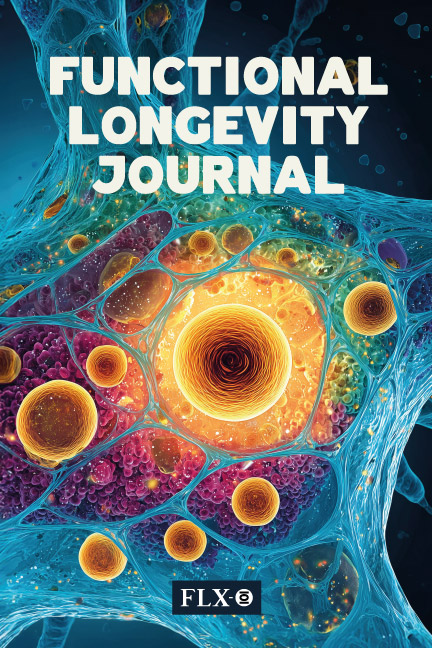
The Functional Longevity Journal from FLX-101 does exactly that—no AI, no clinic, no subscription.
It's your personal navigation system for 52 weeks: with weekly reflections, your own Myokine Check, and the FLX-101 protocols right at your fingertips. Not just a calendar to check off—but a system that grows with your reality.
It doesn't start on January 1. It starts when you're ready.
🔗 Functional Longevity Journal – FLX-101
Longevity is ultimately a question of time. Tools that help us understand our own timeline bring the science of long life into everyday life.
🔗 Longevity AI – The Book of You, The Purist, May 2026
🔗 Longevity AI Platform
5. 😄 Fun Longevity – Quote of the Week
A myokine meets myostatin in the bloodstream.
Myokine: "Where are you going in such a hurry?"
Myostatin: "I have to stop this muscle from getting any bigger."
Myokine: "Too late. He just did HIIT."
Myostatin: "…When will this person finally stop making my life so difficult?"
Myokine: "Hopefully never."
📖 Technical Glossary – New Terms in This Issue, Simply Explained
Apelin – a myokine released during exercise that supports muscle growth, fat metabolism, and heart function; without it, muscles can barely respond to strength training
Biological age – your body's actual level of aging at the cellular and organ level, independent of your date of birth; positively influenced by lifestyle
Biomarkers – measurable biological values (e.g., in blood) that provide insight into health, disease risk, or biological age (covered in the previous issue—included here as a reminder)
Cognitive decline – the age-related reduction in memory, concentration, and processing speed; can be slowed through exercise, sleep, social engagement, and mindset work
Exerkines – an umbrella term for all signaling molecules the body releases during movement; includes myokines (from muscle), cardiokines (from the heart), and hepatokines (from the liver)
HIIT (High-Intensity Interval Training) – short, very intense exercise intervals alternating with recovery phases; currently the most effective format for older adults to reduce fat without losing muscle mass
Hypertrophy – the enlargement of muscle cells through training; occurs when protein synthesis exceeds protein breakdown
IGF-1 (Insulin-like Growth Factor 1) – a growth hormone-like signaling molecule that promotes muscle growth and is stimulated by exercise
Myostatin – the body's natural brake on muscle growth; the less active it is, the more muscle growth is possible; exercise lowers its levels
Resilience – the capacity to absorb stress and recover from it; considered a key protective factor for a long, healthy life—biologically and psychologically
Sweet spot – in exercise science, the range where benefit is greatest and risk is lowest; for longevity-focused strength training, Harvard puts it at 90–120 minutes per week
Trajectory – a progression curve; in medicine, how a health metric develops over time
Your own "Book of You" might already be sitting in your drawer.
The Functional Longevity Journal from FLX-101 does exactly that—no AI, no clinic, no subscription.
It's your personal navigation system for 52 weeks: with weekly reflections, your own Myokine Check, and the FLX-101 protocols right at your fingertips. Not just a calendar to check off—but a system that grows with your reality.
It doesn't start on January 1. It starts when you're ready.
🔗 Functional Longevity Journal – FLX-101
Longevity is ultimately a question of time. Tools that help us understand our own timeline bring the science of long life into everyday life.
🔗 Longevity AI – The Book of You, The Purist, May 2026
🔗 Longevity AI Platform
5. 😄 Fun Longevity – Quote of the Week
A myokine meets myostatin in the bloodstream.
Myokine: "Where are you going in such a hurry?"
Myostatin: "I have to stop this muscle from getting any bigger."
Myokine: "Too late. He just did HIIT."
Myostatin: "…When will this person finally stop making my life so difficult?"
Myokine: "Hopefully never."
📖 Technical Glossary – New Terms in This Issue, Simply Explained
Apelin – a myokine released during exercise that supports muscle growth, fat metabolism, and heart function; without it, muscles can barely respond to strength training
Biological age – your body's actual level of aging at the cellular and organ level, independent of your date of birth; positively influenced by lifestyle
Biomarkers – measurable biological values (e.g., in blood) that provide insight into health, disease risk, or biological age (covered in the previous issue—included here as a reminder)
Cognitive decline – the age-related reduction in memory, concentration, and processing speed; can be slowed through exercise, sleep, social engagement, and mindset work
Exerkines – an umbrella term for all signaling molecules the body releases during movement; includes myokines (from muscle), cardiokines (from the heart), and hepatokines (from the liver)
HIIT (High-Intensity Interval Training) – short, very intense exercise intervals alternating with recovery phases; currently the most effective format for older adults to reduce fat without losing muscle mass
Hypertrophy – the enlargement of muscle cells through training; occurs when protein synthesis exceeds protein breakdown
IGF-1 (Insulin-like Growth Factor 1) – a growth hormone-like signaling molecule that promotes muscle growth and is stimulated by exercise
Myostatin – the body's natural brake on muscle growth; the less active it is, the more muscle growth is possible; exercise lowers its levels
Resilience – the capacity to absorb stress and recover from it; considered a key protective factor for a long, healthy life—biologically and psychologically
Sweet spot – in exercise science, the range where benefit is greatest and risk is lowest; for longevity-focused strength training, Harvard puts it at 90–120 minutes per week
Trajectory – a progression curve; in medicine, how a health metric develops over time
Experienced 🍀
We recommend nothing we haven’t personally experienced, explored, and refined. Our method isn't a theory—it's the result of practice, precision, and personal conviction.
Proven ✅
Over 30 years of experience with the most difficult cases—and no dogma we haven't questioned.
FLX-101 is the result of depth, not trend. And that's exactly what you'll feel.
Explained 📚
Fascia, myokines, HRV are unfamiliar to you? Don't worry—we speak your language.
You'll receive not only therapy, but also clarity. And knowledge you can truly use.
Ambassadors
Health is our most important asset. If we are healthy, all doors are open to us to do what we want and how we want it.

Matthias Walkner
Raid & Motocross rider
Dakar Rally winner
Dakar Rally winner
Benjamin Karl
Snowboarder
Olympic & World Cup winner
Olympic & World Cup winner
Max Franz
Ski racing &
World Cup winner
World Cup winner

Christoph Krenn
Ski racer &
World Cup skier
World Cup skier

Prianthy Tschopp
Speaker &
Entrepreneur
Entrepreneur

Martin Freinademetz
Snowboard &
Motocross Rider
Motocross Rider

Christian Geistdörfer
Motorsport
Rally Co-Driver
Rally Co-Driver

Christian Traber
Motorsport
Classic Car Racing Driver
Classic Car Racing Driver

Finja Matuella
Tennis
Junior Talent
Junior Talent